Why GFRC is Perfect for Architectural Products
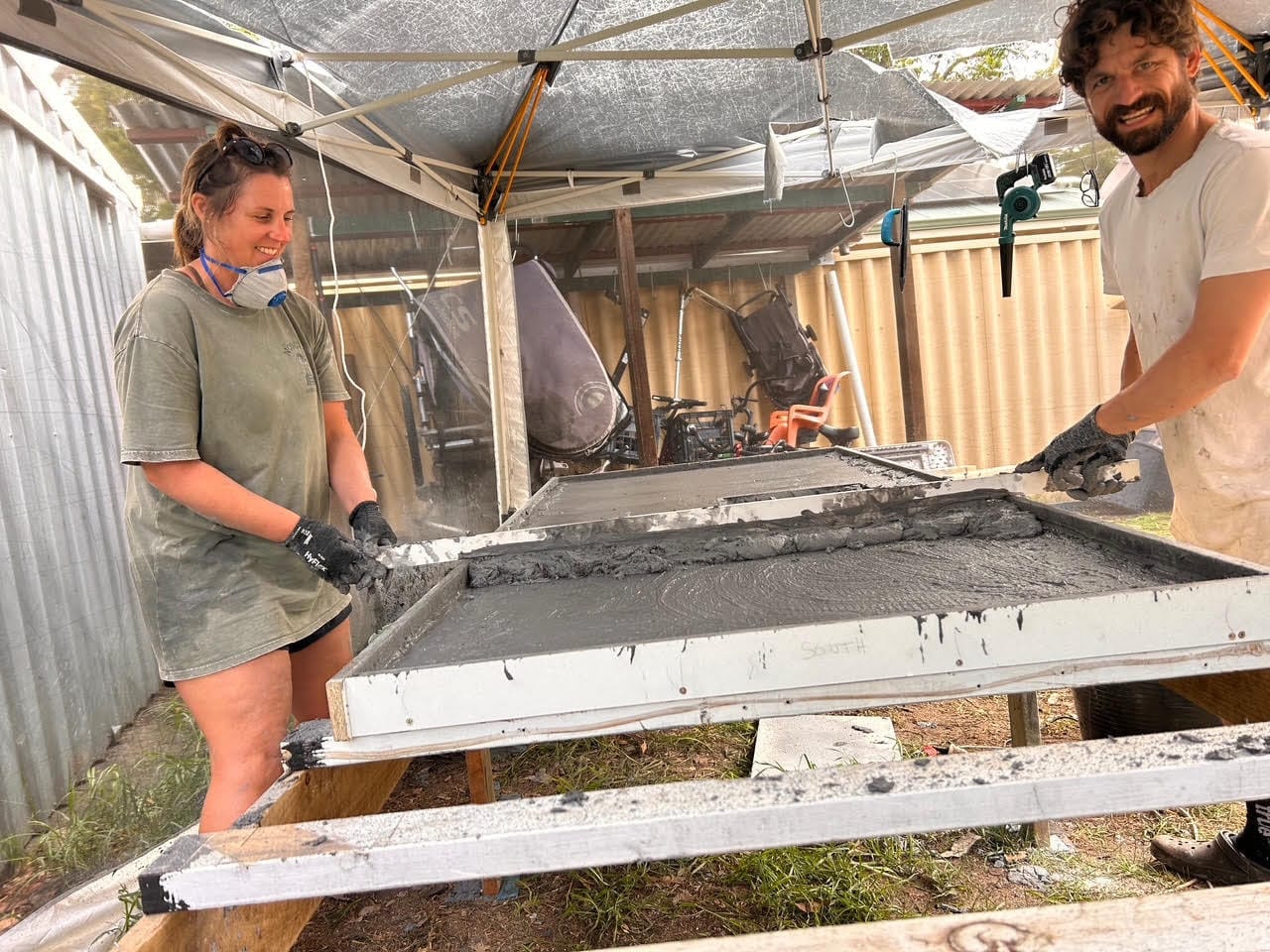
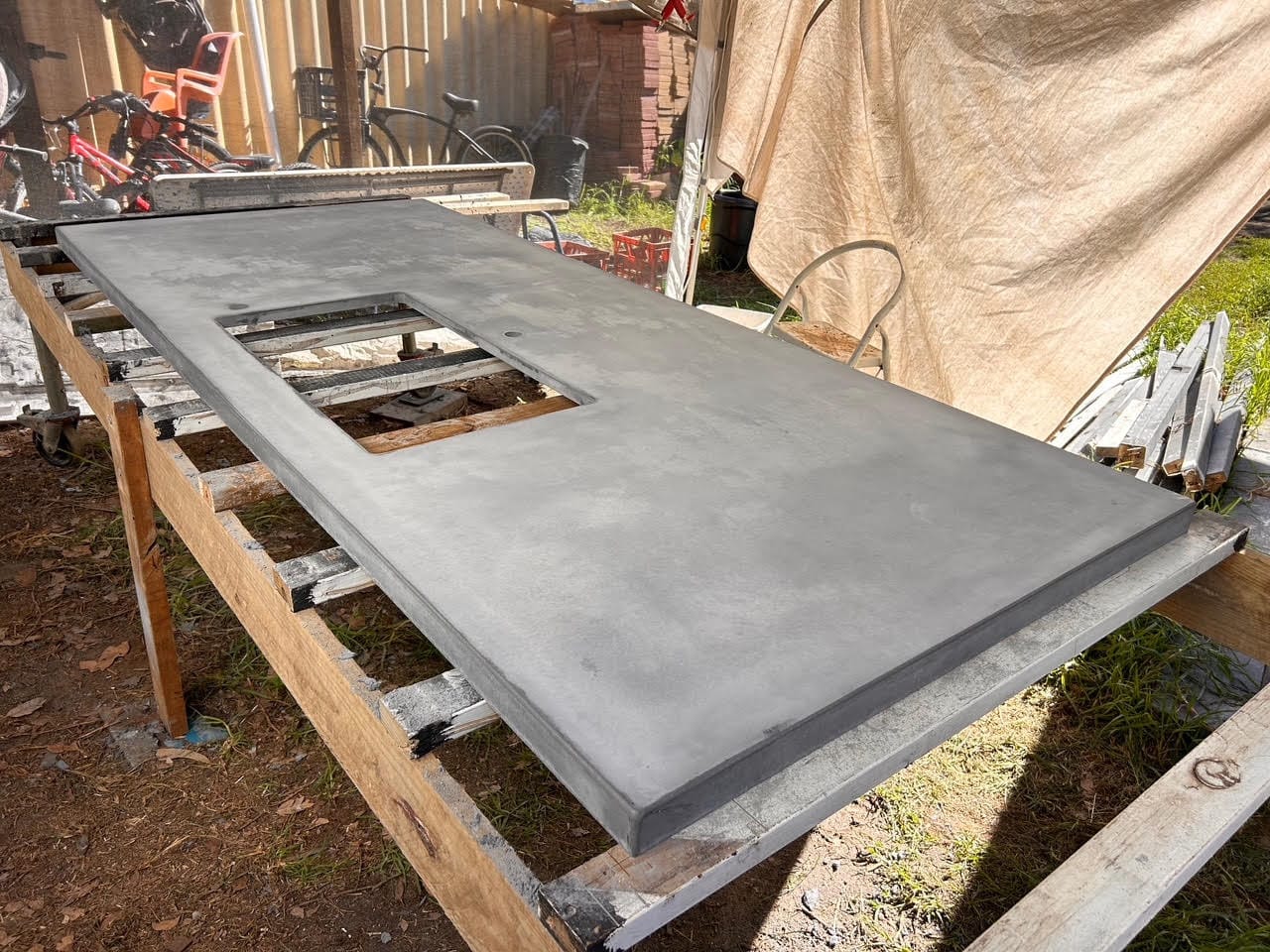
Glass Fibre Reinforced Concrete (GFRC) has transformed the way architects and designers use concrete. By combining exceptional strength with a lightweight construction, GFRC allows elegant, thin-walled designs that would be difficult or impractical using traditional concrete. From bathroom basins and furniture to façade panels and architectural features, GFRC offers the durability, flexibility and design freedom needed for modern architecture.
What makes GFRC different?
Traditional concrete is incredibly strong in compression but heavy and relatively weak in tension. To overcome this, it often requires thick sections and steel reinforcement. GFRC takes a different approach.
By replacing steel reinforcement with alkali-resistant glass fibres distributed throughout the concrete mix, GFRC achieves excellent strength while allowing significantly thinner sections and lighter finished products. This opens up entirely new possibilities for architectural design.
Designed for modern architecture
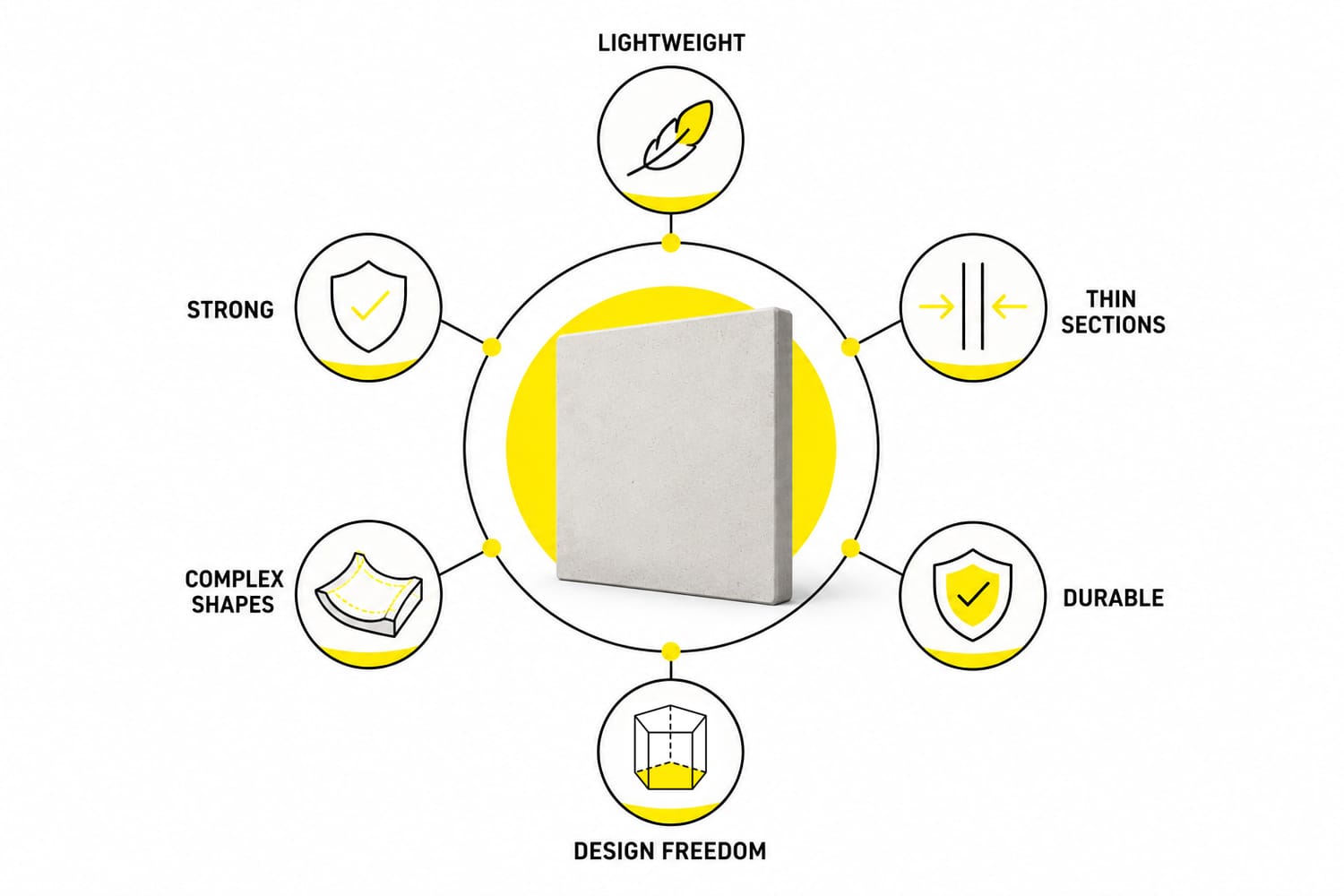
Architectural products demand more than just strength. They need to be:
Beautifully detailed
Durable
Lightweight
Practical to install
Consistent in quality
GFRC delivers all of these qualities while retaining the timeless appearance and tactile character of real concrete.
Whether the goal is a minimalist bathroom, bespoke furniture or commercial architectural features, GFRC provides the flexibility to create clean, refined forms without excessive weight.
Why architects choose GFRC
In our experience one of GFRC's greatest advantages is design freedom. Because the material can be cast into complex moulds, it allows designers to create forms that would be extremely difficult with traditional concrete.
For example:
Thin, elegant profiles
Crisp edges and fine details
Large components with reduced weight
Complex curves and organic forms
Seamless integrated designs
Rather than designing around the limitations of concrete, architects can focus on creating the spaces they envision.
Ideal applications for GFRC
GFRC is used in a wide range of architectural applications, including:
Bathroom basins
Floating vanity tops
Furniture
Reception desks
Architectural cladding
Wall panels
Outdoor furniture
Planters
Commercial fit-outs
Its combination of strength, durability and relatively low weight makes it suitable for both residential and commercial projects.
Built to last
Architectural products need to perform for years, not just look good on installation day. When manufactured correctly and protected with an appropriate sealer, GFRC offers excellent long-term durability and everyday performance. It resists cracking better than conventional concrete in thin applications, remains dimensionally stable and develops the natural character that makes concrete such a timeless architectural material. Like all concrete, subtle variation in tone and texture is part of its appeal, making every piece unique.
A material that complements modern design
GFRC works particularly well alongside other natural materials.
It pairs beautifully with:
Timber
Natural stone
Travertine
Brass
Stainless steel
Black fixtures
Glass
Its quiet, understated appearance allows it to complement a wide variety of architectural styles, from minimalist interiors to contemporary commercial spaces.
Why Concrete Studio uses GFRC
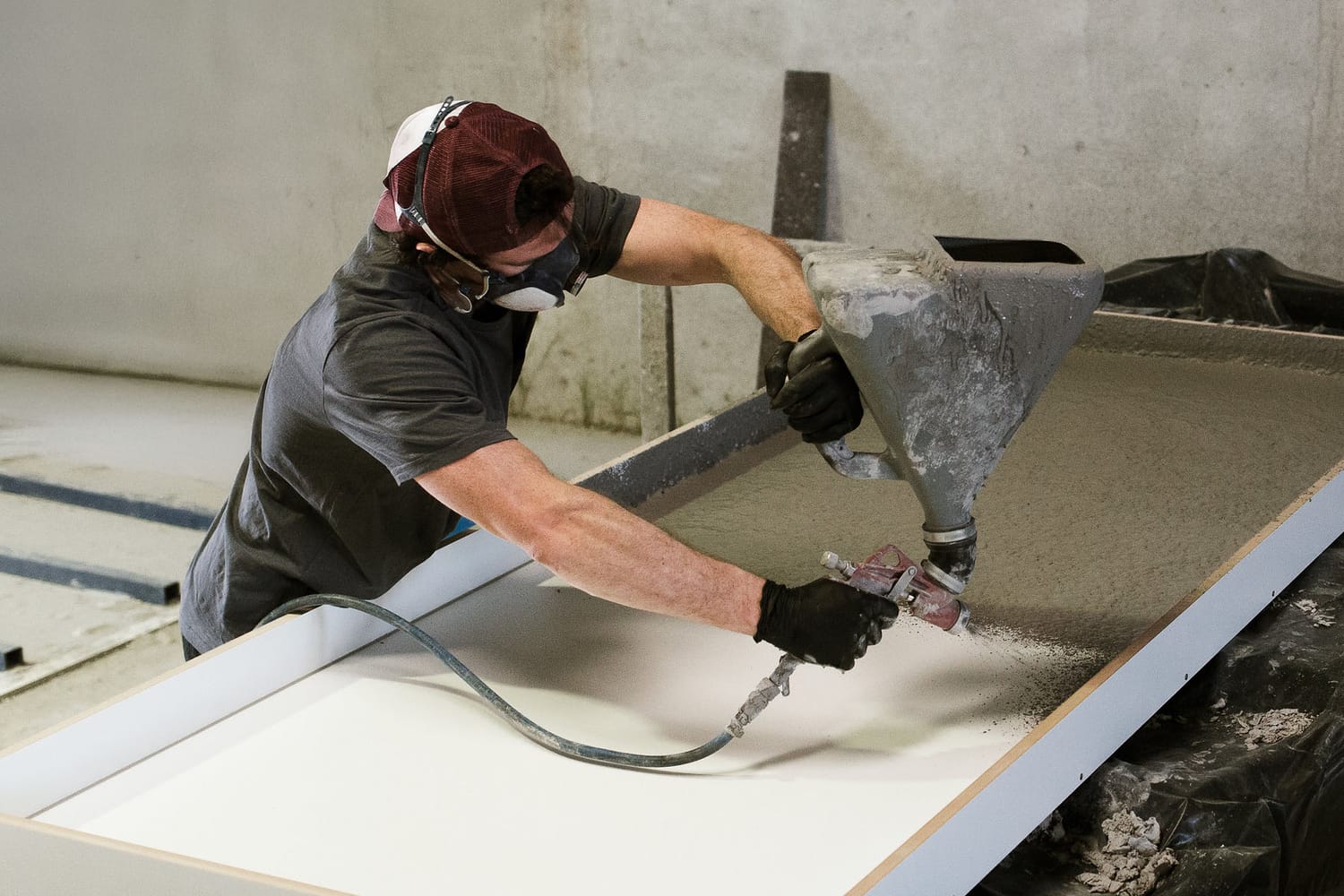
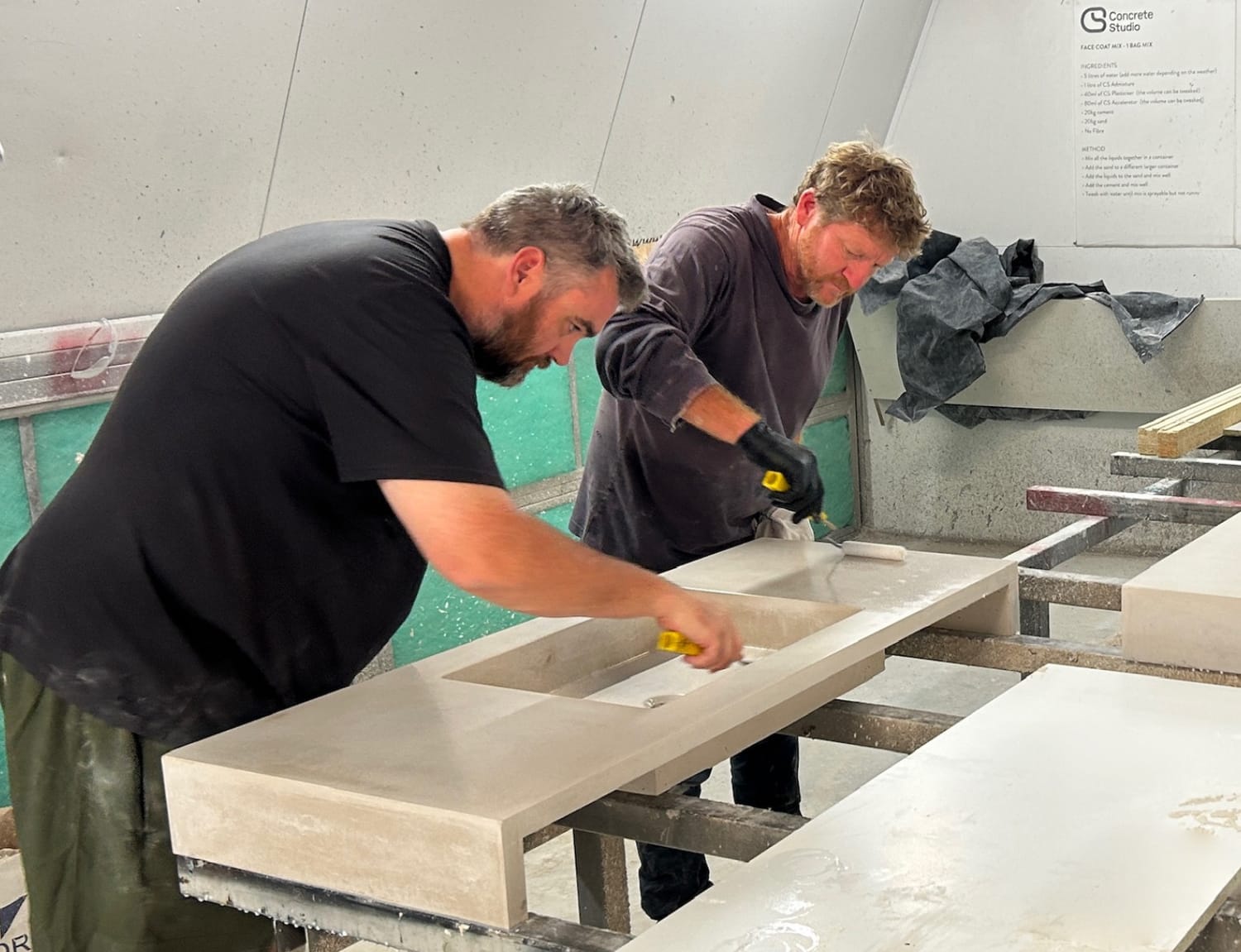
At Concrete Studio, GFRC is the foundation of our architectural collections. Its strength, versatility and ability to produce lightweight, handcrafted pieces allow us to create products that combine refined aesthetics with practical performance. Every piece is manufactured using our proven GFRC process before being carefully detailed and sealed to ensure it is ready for everyday living.
Want to make your own GFRC projects?
Whether you're just getting started or already working with concrete, our courses are designed to help you build real skills and confidence.
Learn lightweight techniques GFRC from industry professionals
Step-by-step online training at your own pace
Hands-on workshops in Australia and Spain
Suitable for beginners, makers, designers, fabricators and professionals
Frequently Asked Questions
Why is GFRC used instead of traditional concrete?
GFRC offers similar visual qualities to traditional concrete while being significantly lighter and allowing much thinner sections.
Can GFRC be used outdoors?
Yes. When manufactured and sealed correctly, GFRC is suitable for many exterior architectural applications, including furniture, cladding and planters.
Is GFRC suitable for commercial projects?
Absolutely. GFRC is widely used in commercial interiors, hospitality spaces and architectural installations because of its durability and design flexibility.
Can GFRC be customised?
Yes. GFRC can be produced in a wide range of shapes, sizes, colours and finishes, making it suitable for both standard collections and bespoke architectural projects.
Want to make your own GFRC projects?
Whether you're just getting started or already working with concrete, our courses are designed to help you build real skills and confidence.
Learn lightweight techniques GFRC from industry professionals
Step-by-step online training at your own pace
Hands-on workshops in Australia and Spain
Suitable for beginners, makers, designers, fabricators and professionals