
GFRC vs Microcement: What's the Difference?
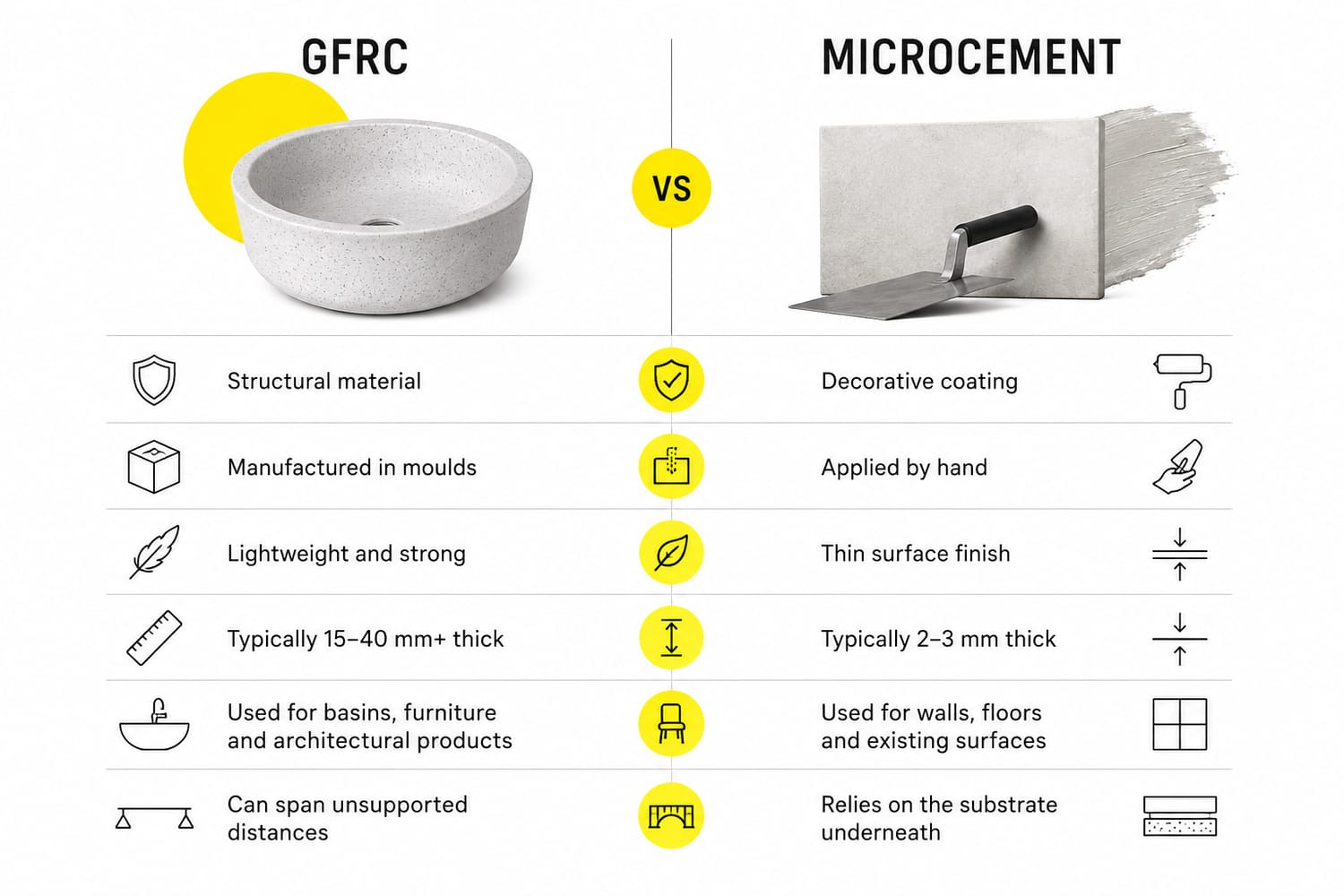
GFRC (Glass Fibre Reinforced Concrete) and microcement are often confused because they share a similar concrete appearance. However, they are designed for completely different purposes. GFRC is a lightweight structural concrete used to manufacture products like basins, furniture and architectural elements, while microcement is a thin decorative coating applied over existing surfaces. Understanding the difference is essential when choosing the right material for your project.
What is the difference between GFRC and microcement?
Although both materials contain cement, that's largely where the similarities end. GFRC is a manufactured product. It is cast into moulds to create strong, lightweight architectural pieces such as basins, vanity tops, furniture and cladding.
Microcement is a decorative finish. It is hand-applied in thin layers over prepared surfaces to create seamless walls, floors, bathrooms and benchtops. They aren't competing materials. In fact, they often work beautifully together.
What is GFRC?
GFRC (Glass Fibre Reinforced Concrete) is a high-performance concrete reinforced with alkali-resistant glass fibres.
The fibres dramatically improve tensile strength, allowing products to be manufactured much thinner and lighter than traditional concrete while maintaining excellent durability.
At Concrete Studio, GFRC is used to create architectural products including:
Bathroom basins
Vanity tops
Furniture
Planters
Architectural features
Unlike conventional concrete, GFRC allows elegant, refined forms without unnecessary weight.
What is microcement?
Microcement is a decorative cement-based coating that is applied directly onto prepared surfaces.
Rather than manufacturing a new object, it transforms an existing one.
It is commonly used on:
Bathroom walls
Floors
Shower enclosures
Splashbacks
Benchtops
Built-in furniture
Because it is only around 2–3 mm thick, it is particularly popular for renovation projects.
Where is GFRC used?
GFRC is used in a wide variety of architectural and design applications, including:
Bathroom basins
Vanity tops
Kitchen islands
Furniture
Reception desks
Commercial interiors
Exterior cladding
Planters
Fire surrounds
Bespoke architectural features
Its combination of strength, versatility and refined appearance makes it suitable for both residential and commercial projects.
Which material is stronger?
If you're comparing structural strength, GFRC is significantly stronger. GFRC is engineered to support its own weight and, depending on the application, can carry substantial loads despite being relatively thin. Microcement isn't designed to carry loads. Instead, it relies entirely on the surface beneath it.
Think of it this way:
GFRC is the object.
Microcement is the finish.
Which is better for bathrooms?
The answer depends on the application.
Choose GFRC for:
Basins
Vanity tops
Shelves
Furniture
Freestanding features
Choose microcement for:
Floors
Walls
Shower surrounds
Splashbacks
Continuous room finishes
Many modern bathrooms combine both materials to achieve a seamless, minimalist aesthetic.
Which material should you choose?
Choose GFRC if you need:
A basin
Vanity top
Furniture
A structural architectural element
Choose microcement if you want:
Seamless walls
Continuous flooring
A modern renovation finish
To update existing surfaces without removing them
Many projects benefit from using both materials together.
Frequently Asked Questions
Is microcement the same as GFRC?
No. GFRC is a structural concrete material used to manufacture products, while microcement is a decorative coating applied to existing surfaces.
Can you make a basin from microcement?
No. Microcement is not designed to create structural products like basins or furniture.
Which lasts longer?
Both materials are highly durable when installed correctly, but they serve different purposes. GFRC is designed as the finished product, whereas microcement is a surface finish that depends on the condition of the substrate beneath it.
Can GFRC and microcement match?
Yes. Their similar textures and natural appearance make them an excellent combination in contemporary interiors.