
How Strong is GFRC?
Glass Fibre Reinforced Concrete (GFRC) is known for its impressive strength, but how strong is it really? The answer depends on how you're measuring strength. While GFRC isn't designed to replace structural concrete in buildings, it offers an exceptional strength-to-weight ratio, making it ideal for architectural concrete products.
Is GFRC strong?
Yes.
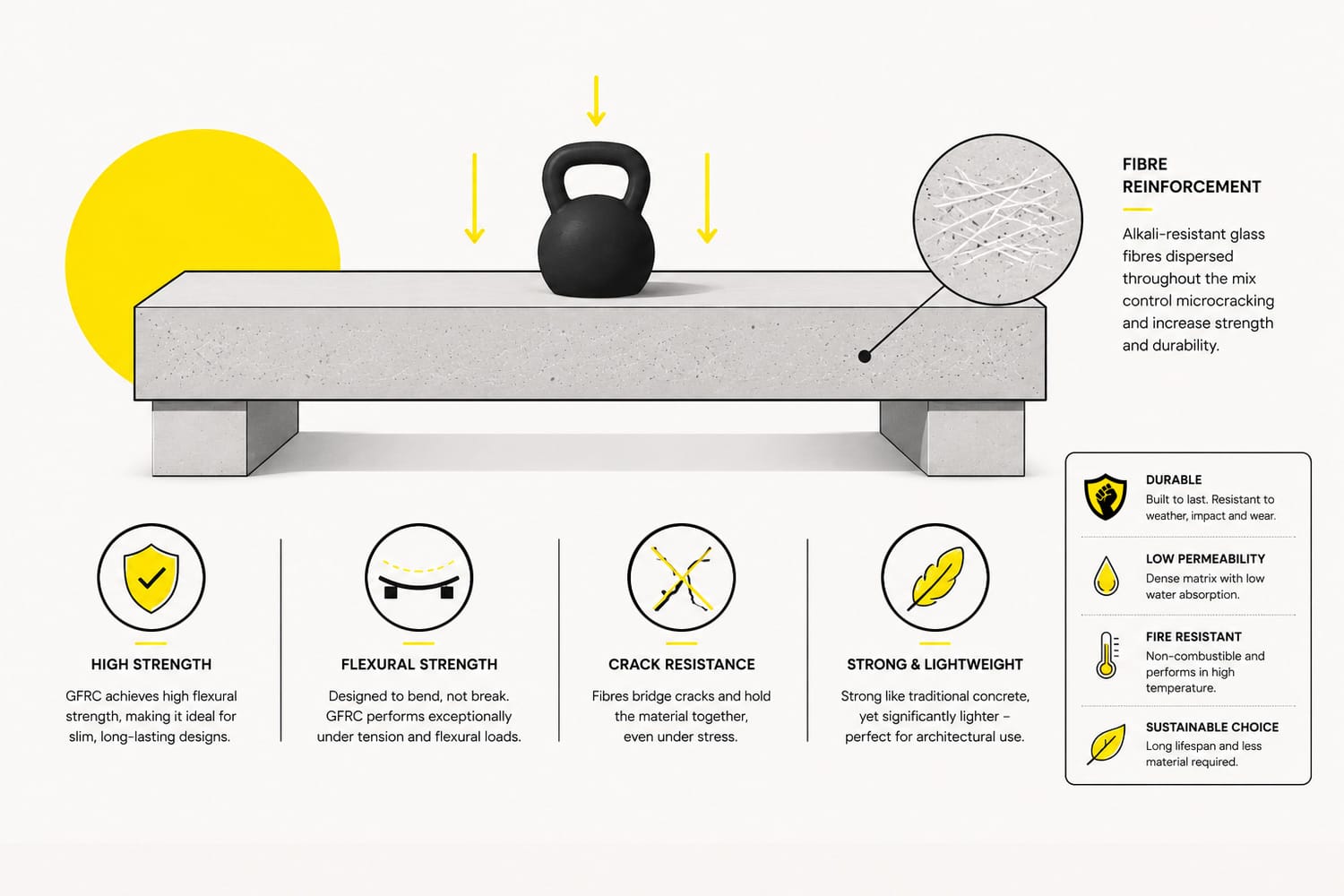
GFRC is significantly stronger than many people expect. Its combination of cement, polymers and thousands of alkali-resistant glass fibres creates a material that performs exceptionally well in architectural applications.
Rather than relying on mass alone, GFRC gains much of its performance from the way the fibres reinforce the concrete throughout the entire mix.
The result is a material that can be manufactured in much thinner sections while remaining durable enough for everyday use.
How does GFRC become so strong?
Traditional concrete performs extremely well under compression but is much weaker when bent or placed under tension. GFRC improves this by distributing thousands of glass fibres throughout the concrete. These fibres help control cracking and improve the material's ability to resist bending and impact. Think of the fibres as thousands of tiny reinforcements spread evenly throughout the concrete rather than one large reinforcing bar hidden inside it.
Strength vs Weight
One of GFRC's greatest advantages is not simply its strength, but its strength-to-weight ratio. Because products can be manufactured much thinner than conventional concrete, they are considerably lighter while still offering excellent durability. For example, a concrete vanity manufactured using GFRC may weigh substantially less than the same vanity made from traditional concrete, making transportation and installation much easier.
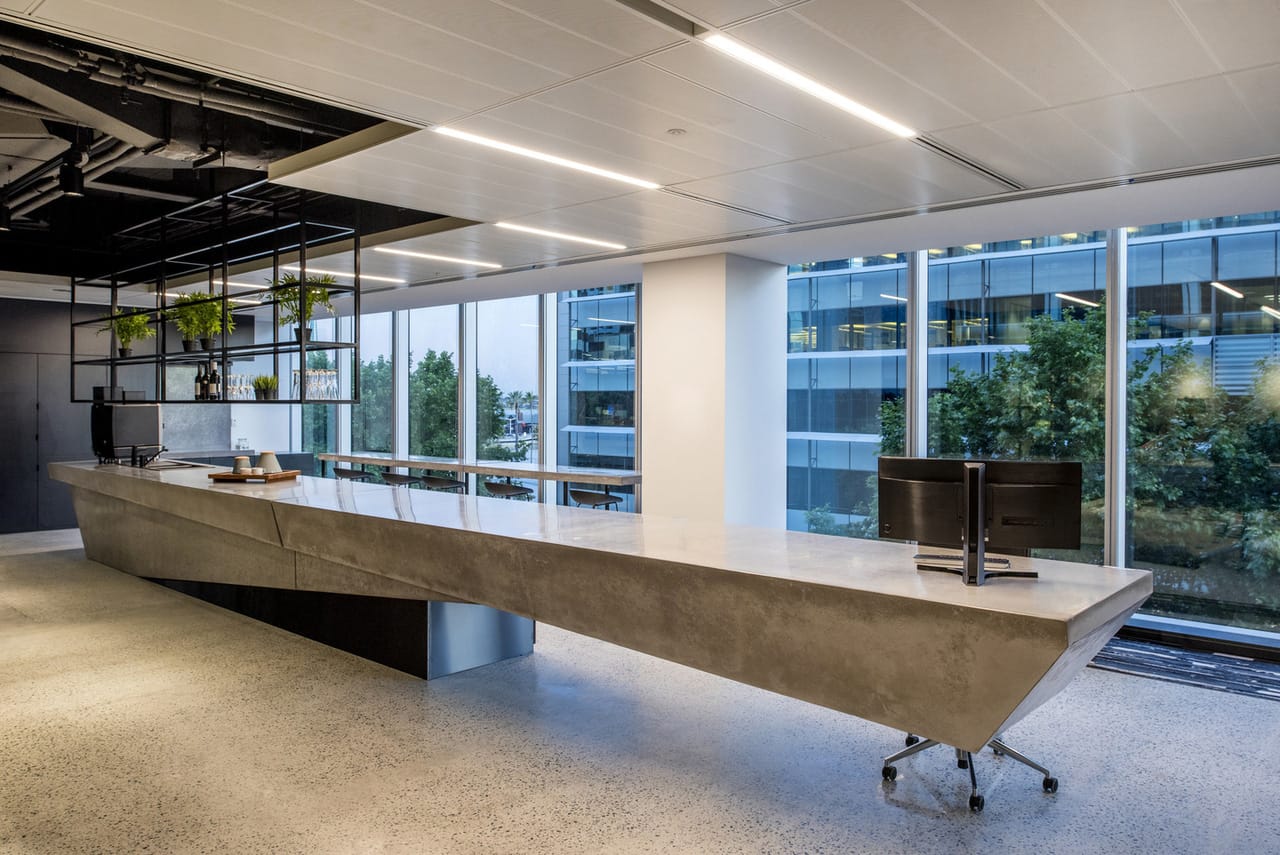
Pictured: A ten-metre cantilevered reception desk, we made for Brookfield’s head office. Engineered to project strength while appearing weightless.
Can GFRC support weight?
Absolutely.
GFRC is commonly used for:
Bathroom vanities
Wall-mounted basins
Countertops
Furniture
Reception desks
Commercial fit-outs
When properly designed and installed, these products are built to withstand normal everyday use for many years. The design of the product, its supports and installation method are just as important as the concrete itself.
Does GFRC crack easily?
No.
One of the biggest misconceptions is that all concrete cracks easily.
Properly manufactured GFRC is specifically engineered to minimise structural cracking through:
Glass fibre reinforcement
Careful mix design
Controlled curing
Correct manufacturing techniques
Like all cement-based materials, very fine surface crazing can occur naturally over time. This is usually cosmetic and does not affect the structural performance of the product.
Is GFRC stronger than traditional concrete?
The two materials are designed for different jobs. Traditional reinforced concrete is intended for structural construction, including buildings, bridges and foundations. GFRC is designed for architectural applications where reduced weight, refined detailing and excellent durability are equally important. Rather than asking which is stronger, it's more accurate to ask which material is better suited to the intended application.
What products are made from GFRC?
Its strength makes it suitable for a wide range of architectural products, including:
Concrete basins
Vanity tops
Furniture
Wall cladding
Fireplace surrounds
Commercial counters
Outdoor furniture
Bespoke architectural pieces
These applications benefit from GFRC's ability to combine strength with elegant, lightweight construction.
Why we use GFRC
Every Concrete Studio product is manufactured using GFRC because it allows us to create clean architectural forms without the excessive weight associated with traditional concrete. Its strength gives us the confidence to produce slim, refined designs that are built for everyday living while maintaining the natural beauty of concrete.
Want to make your own GFRC projects?
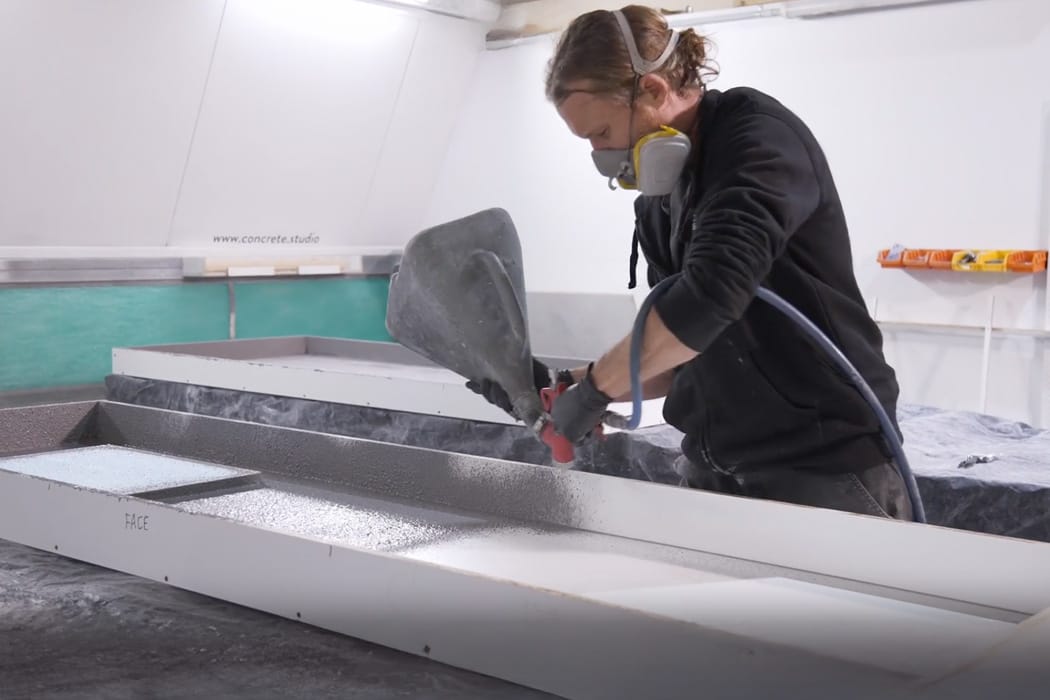
Whether you're just getting started or already working with concrete, our courses are designed to help you build real skills and confidence.
Learn lightweight techniques GFRC from industry professionals
Step-by-step online training at your own pace
Hands-on workshops in Australia and Spain
Suitable for beginners, makers, designers, fabricators and professionals

Frequently Asked Questions
Can GFRC break?
Like any material, GFRC can be damaged if subjected to excessive impact or misuse. However, when correctly manufactured and installed, it is extremely durable in normal residential and commercial applications.
Is GFRC stronger than ceramic?
Both materials have different characteristics. GFRC generally offers greater impact resistance and can be manufactured in larger seamless forms that would be difficult to achieve with ceramic.
Is GFRC suitable for commercial projects?
Yes. GFRC is widely used in commercial interiors, hospitality projects and public spaces because of its combination of durability, appearance and reduced weight. Have a look at some of our custom work.
Why doesn't GFRC need steel reinforcement?
The alkali-resistant glass fibres provide reinforcement throughout the material, allowing many architectural products to be manufactured without traditional steel reinforcement.