Everything You Need to Know Before Making a Concrete Countertop
Many people assume a concrete countertop is simply made from the same concrete used for driveways, footpaths or structural building slabs. It isn't! Here you'll learn why and about the right methods to use.
Concrete benchtops have become one of the defining features of contemporary architecture. Their ability to be customised into almost any shape, size or finish has made them a favourite with architects, designers, furniture makers and homeowners looking for something unique. We've been making concrete countertops for over ten years and if you're considering making your own concrete designs understanding the matreial is the best place to begin.
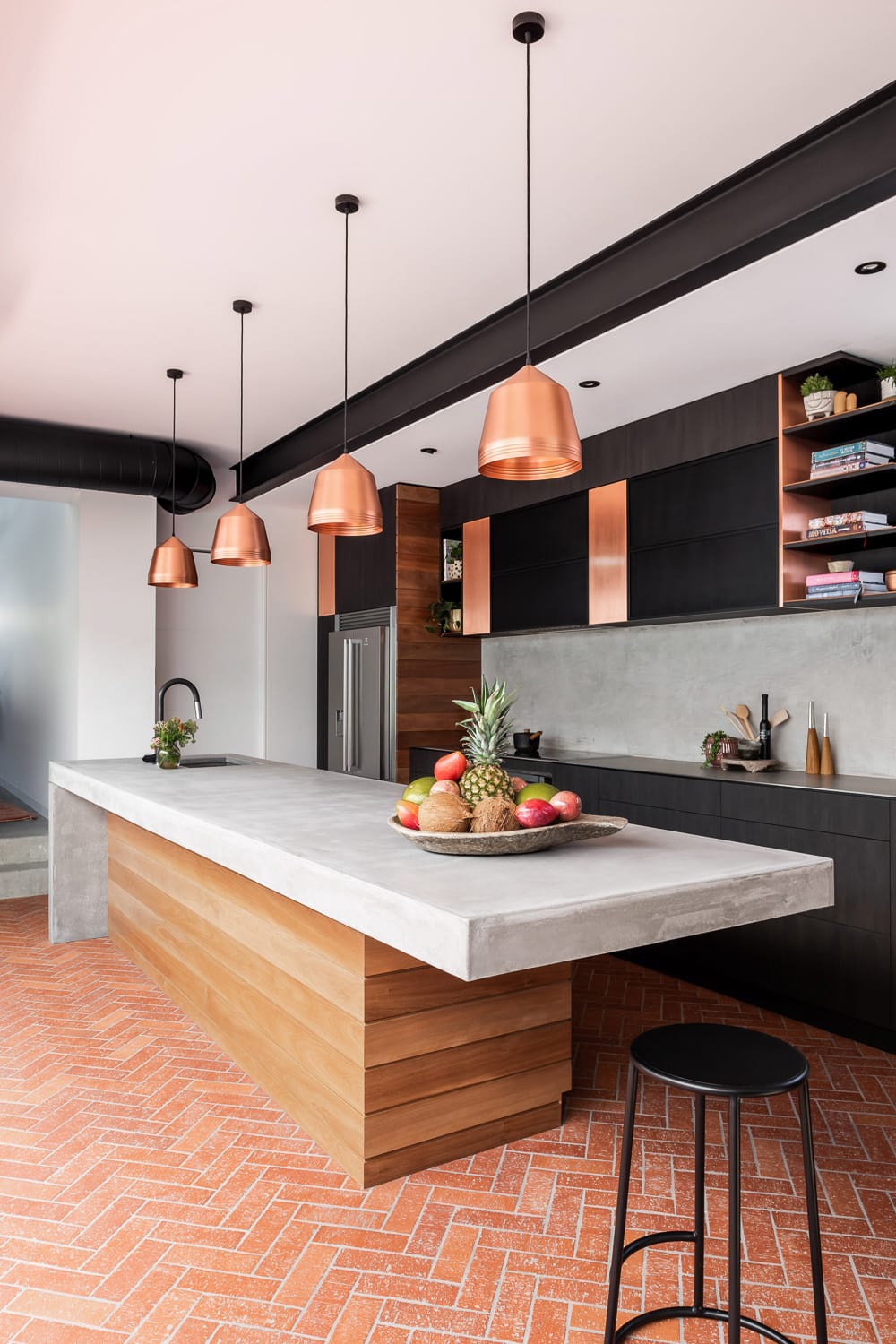
We design concrete countertops to deliver both structural performance and exceptional surface quality.
Why Concrete Countertops Are Different from Ordinary Concrete
Concrete used in construction has one primary purpose: structural performance. Architectural concrete has a much broader job to do. Today, many high-quality concrete countertops are manufactured using GFRC (Glass Fibre Reinforced Concrete), a modern concrete technology that allows thinner, lighter and more versatile architectural elements than traditional reinforced concrete. However, the material alone doesn't guarantee a great result. A concrete countertop still needs to deliver crisp edges, refined surface quality, consistent colour and long-term durability while meeting the expectations people have of premium furniture and interior architecture. At Concrete Studio, we don't think of a countertop as simply a slab of concrete. We see it as an architectural object. Every decision, from the initial concept through to the final sealer, influences both the appearance and performance of the finished piece.
The concrete itself is only one part of a much larger process.
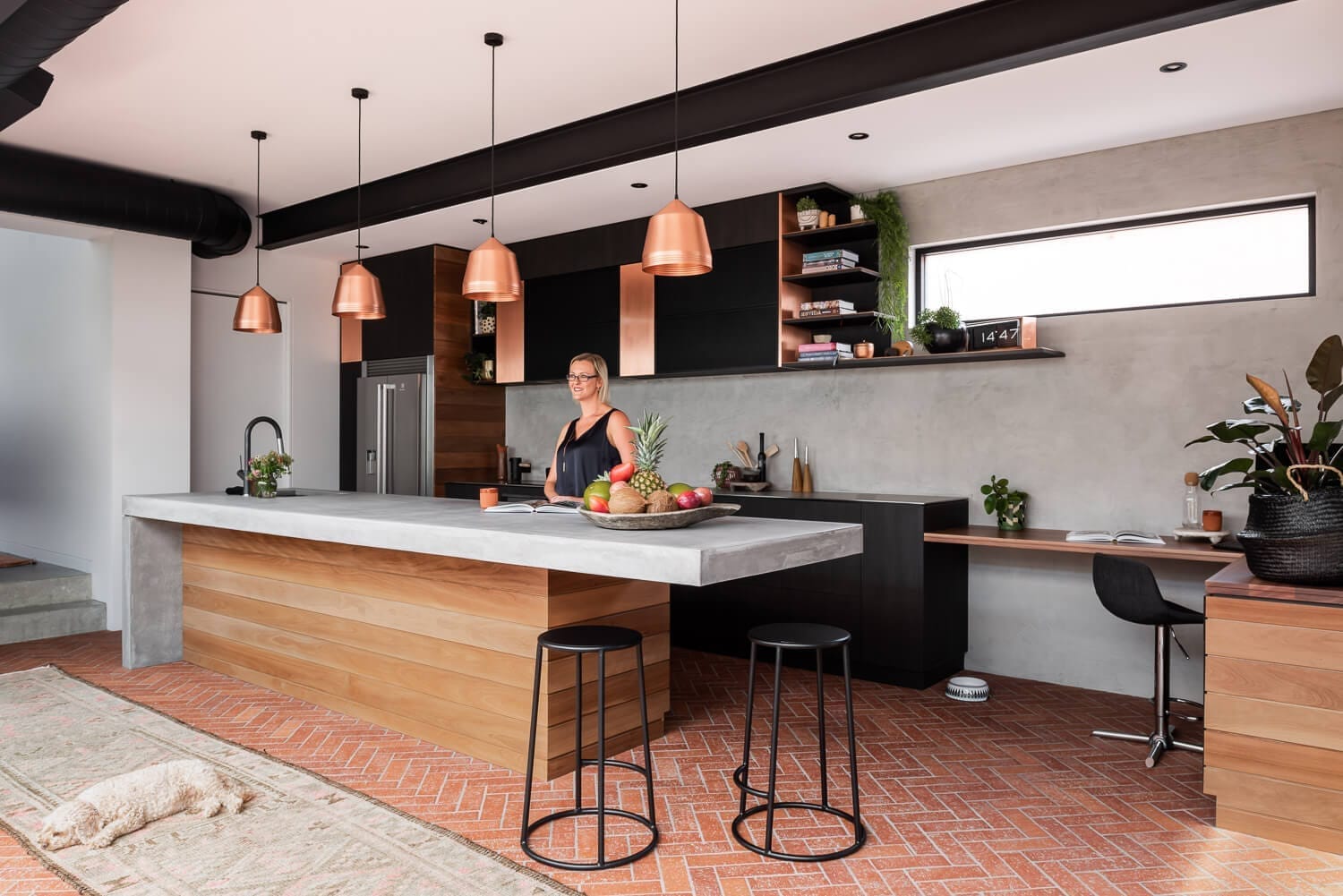
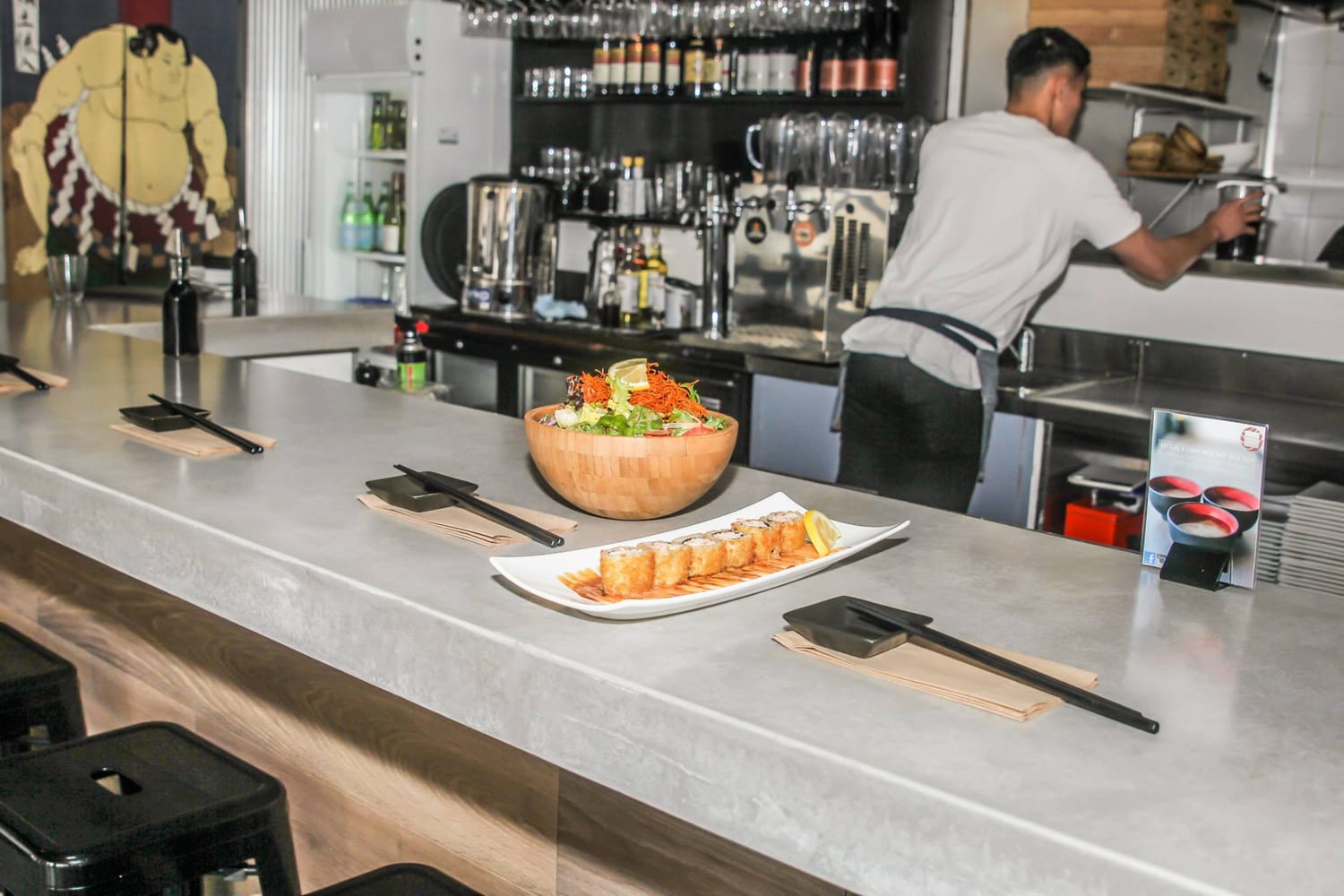
Large-format architectural concrete creates stunning centerpieces and pairs beautiful with almost any material.
Modern Concrete Has Changed
Professional concrete countertops are rarely manufactured using the same methods that were common twenty years ago. Advances in materials, reinforcement systems and manufacturing techniques have transformed what is possible. The concrete we use is thinner, lighter and considerably more versatile than traditional reinforced concrete, allowing us to create floating vanities, integrated sinks, large kitchen islands and sculptural furniture that would once have been impractical or impossible.
Rather than relying on a single manufacturing method, we select the most appropriate system for each project based on its size, structural requirements, appearance and installation.
Every Successful Project Starts with Design
One of the biggest mistakes we see is people thinking that making a concrete benchtop starts with mixing concrete. For us, that's one of the final stages. Every project begins with understanding how the finished piece will be used. Before we think about moulds or materials, we're considering proportions, weight, installation, support, plumbing, transportation and how the piece should feel within the space. Many of the challenges in architectural concrete are solved long before the first batch is mixed.
Questions like these shape every project:
How will the benchtop be supported?
Can it be installed in one piece?
How will it be transported?
Does it include an integrated sink?
Where are the tap holes and services?
What finish is being achieved?
How should it feel within the space?
Precision Starts with Preparation
Concrete is a cast material. Every concrete countertop, concrete countertop and concrete sink begins with a mould, and the quality of that mould has a direct and important influence on the finished piece. Dimensions, edge profiles, surface quality and overall accuracy are all established before any concrete is cast. In our experience, mould making is one of the most important skills in architectural concrete manufacturing.
"A well-designed mould doesn't just produce a better result, it makes every stage that follows more predictable."
Philip Mark Martin
Course Instructor, Concrete Studio Director

Strength Is About More Than Concrete
People often ask us what GFRC mix we use, expecting that the mix itself is the secret. In reality, strength comes from the entire manufacturing process. The mix is one step of the process in addition reinforcement, mould construction, curing, finishing and sealing all work together to determine how a piece performs over many years of daily use. Changing one part of the process almost always affects another.
Why Curing Matters
One of the most overlooked stages of manufacturing is curing. Concrete doesn't simply dry after it's cast. It gains strength through hydration, a chemical process that continues long after the concrete leaves the mould. The way concrete is cured has a significant influence on its strength, durability, colour consistency and long-term performance. We've seen beautifully designed projects compromised simply because this stage wasn't given the attention it deserved. Like many aspects of architectural concrete, the best results come from understanding why each stage matters and taking equal care with each step of the process.
Finishing Creates the Character
No two pieces of architectural concrete are ever identical. Unlike manufactured stone or porcelain, concrete develops subtle variation in colour, texture and surface character that gives every project its own identity. The final finish is influenced by every stage of the manufacturing process, from the materials selected through to the sealing techniques used. GFRC celebrates these natural characteristics, which is one of the reasons it continues to be specified by architects and designers around the world.
Is Making Your Own Concrete Benchtop Right for You?
Building your own concrete countertop can be an incredibly rewarding project. Whether you're a furniture maker, cabinet maker, builder, designer or enthusiastic DIYer, learning to work with architectural concrete opens up a huge range of creative possibilities. Producing professional-quality is possible even for beginners. The skill lies in understanding why materials behave the way they do, how each stage affects the next and how the small decisions combine to produce a finished piece that will perform for decades.
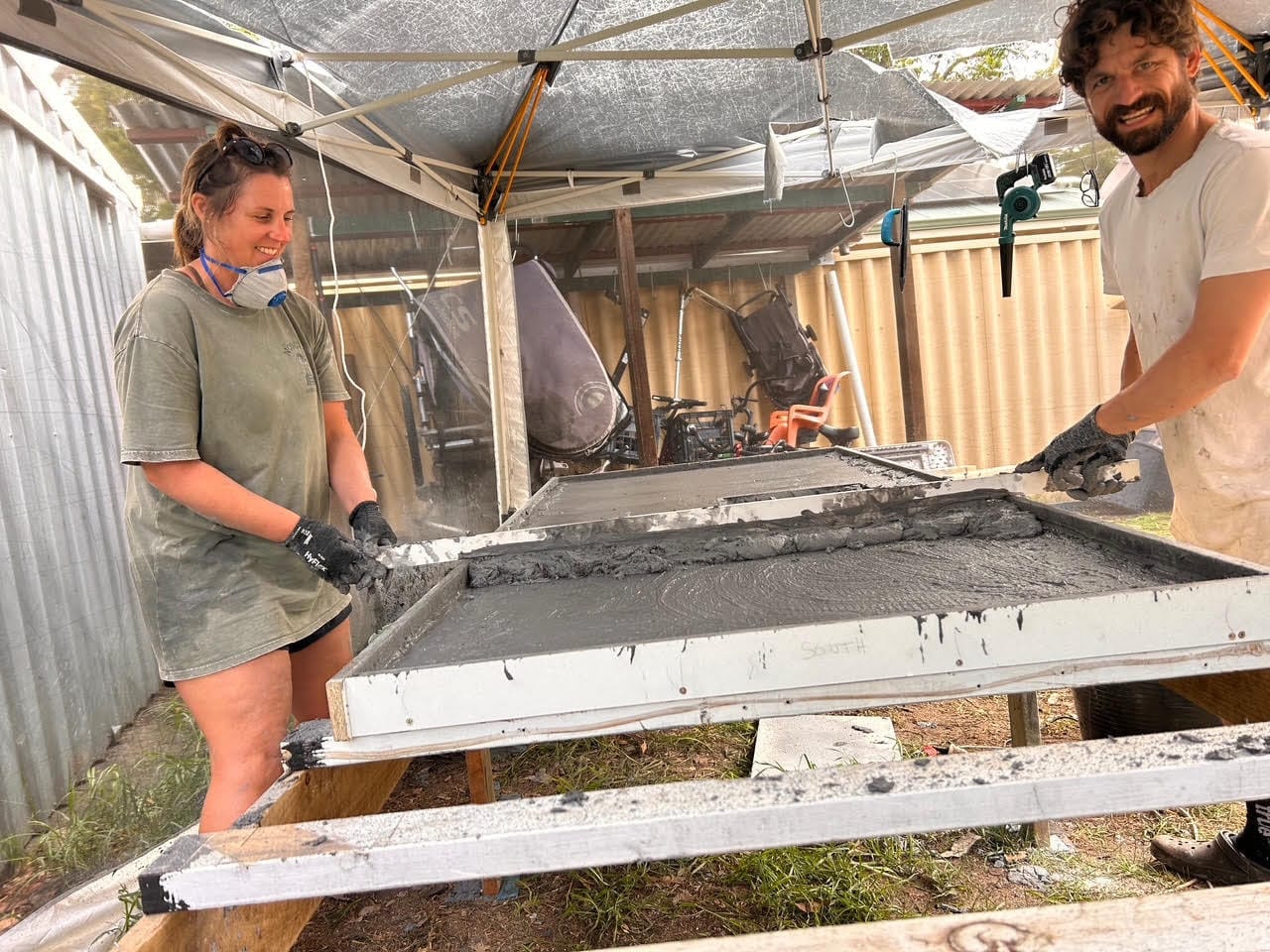
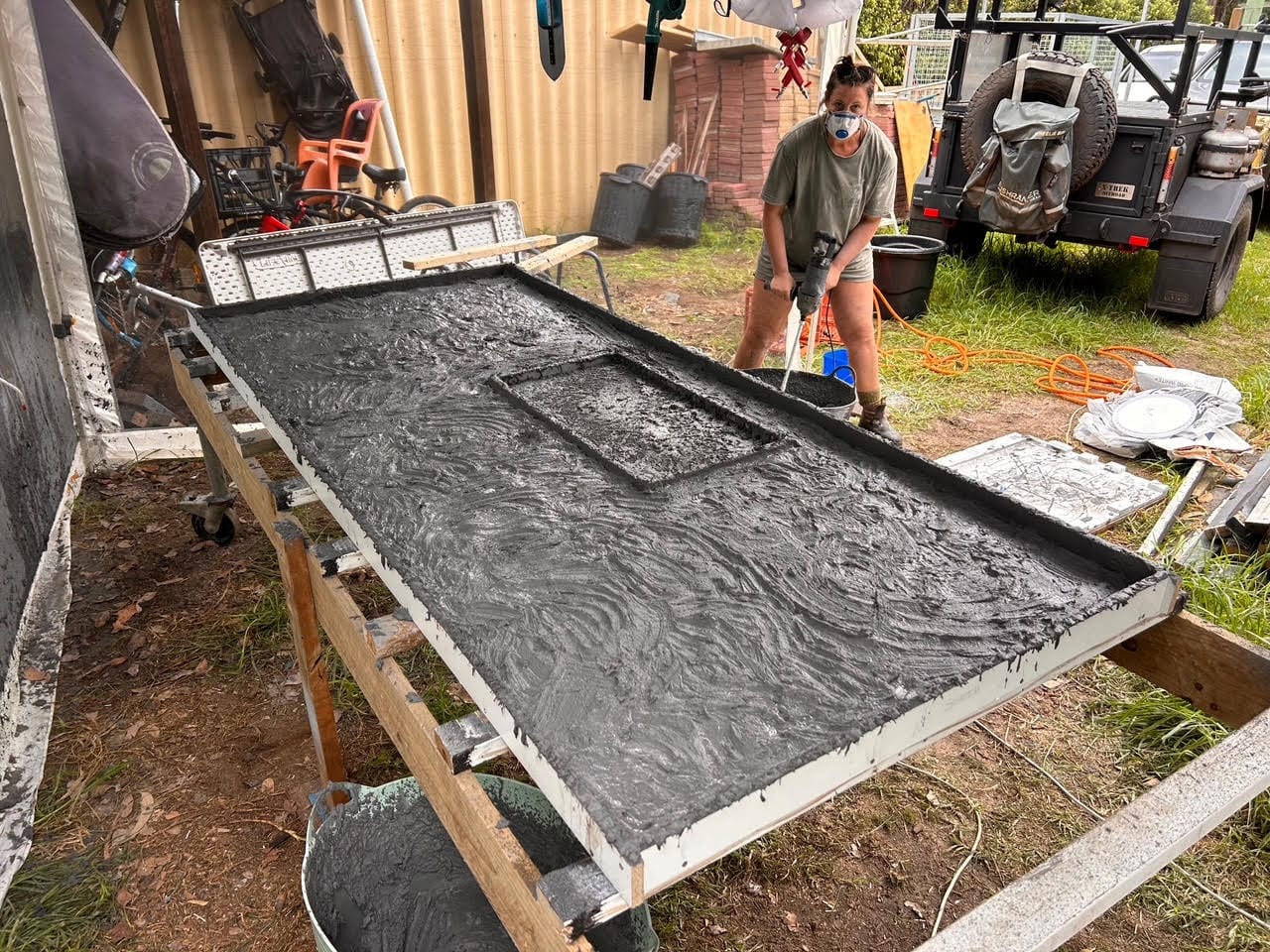
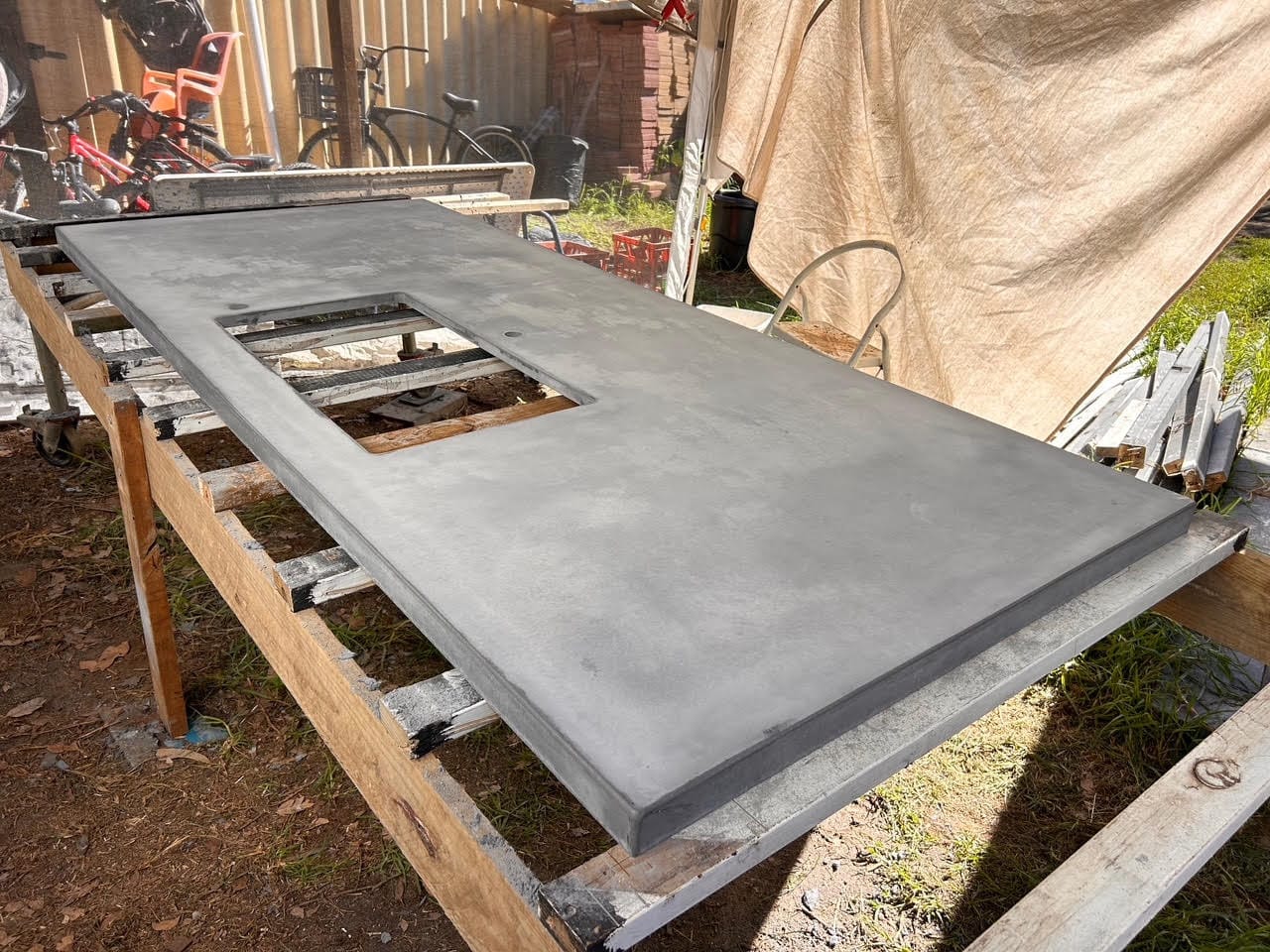
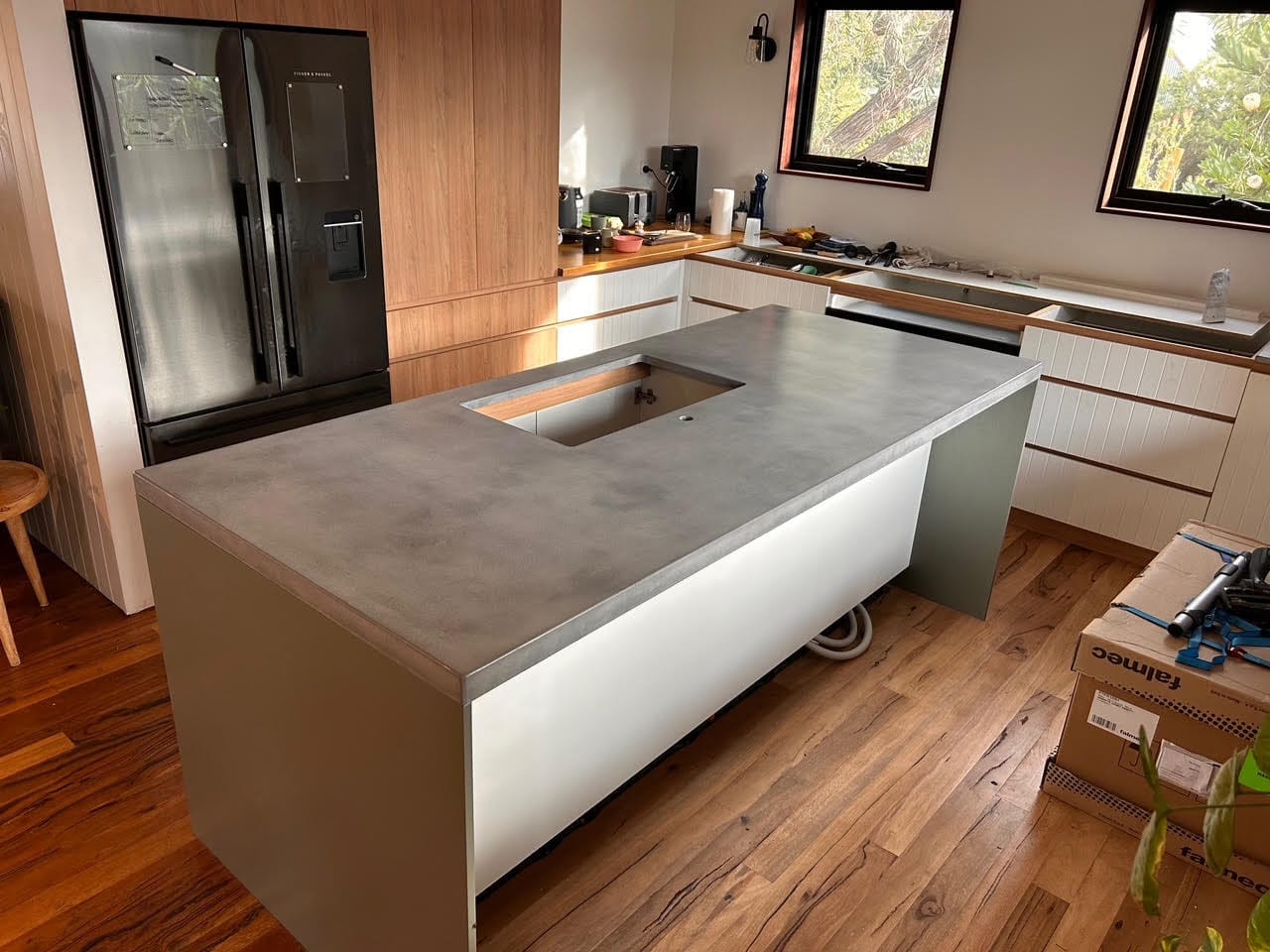
Designed, manufactured and installed by one of our online students after completing the course. Every stage of the process, from mould making to the finished kitchen island, was completed using the techniques taught throughout the program.
Learn Architectural Concrete with Concrete Studio School
At Concrete Studio, we've spent years refining the methods we use to manufacture architectural concrete for residential, commercial and hospitality projects across Australia, Europe and the United States. Our online courses and hands-on workshops are designed to help you understand not just how architectural concrete is made, but why experienced makers make the decisions they do.
From concrete countertops and integrated sinks to GFRC, mould making, lightweight construction and finishing techniques, our goal is to give you the knowledge, confidence and practical understanding to create work you're proud of.
What Is GFRC?
GFRC stands for Glass Fibre Reinforced Concrete. It is a lightweight, high-strength concrete that combines cement, fine aggregates, polymers and alkali-resistant glass fibres to create durable architectural products with exceptional design flexibility.
Unlike traditional concrete, GFRC can be cast in thinner sections while maintaining excellent strength and durability. This allows makers and fabricators to create lightweight concrete benchtops, vanity tops, sinks, furniture and architectural elements that would be difficult or impractical using conventional concrete methods.
The glass fibres act as reinforcement throughout the material, helping to reduce cracking, improve tensile strength and increase overall performance. Combined with modern polymers and production techniques, GFRC has become one of the most widely used materials for architectural concrete fabrication.
At Concrete Studio, we use GFRC to manufacture concrete basins, vanity tops, furniture, cladding and custom architectural products. The techniques taught in this course are based on the same production methods we use in our own workshop every day.
Whether you're interested in concrete furniture, concrete benchtops, concrete sinks or architectural concrete fabrication, learning GFRC opens up a wide range of creative and commercial opportunities.