
Is GFRC Waterproof?
Glass Fibre Reinforced Concrete (GFRC) is widely used for bathroom basins, vanity tops and architectural products, but is it actually waterproof? The short answer is no, but with the right manufacturing process and sealer, it performs exceptionally well in wet environments.
Is GFRC waterproof?
No. Like all cement-based materials, GFRC is naturally porous. This means water can be absorbed into the concrete if it is left completely unprotected. However, this isn't unique to GFRC. Traditional concrete, natural stone, terrazzo and many other architectural materials are also porous.
Rather than making the concrete itself waterproof, we apply specialist sealers that protect the surface from moisture and everyday staining.
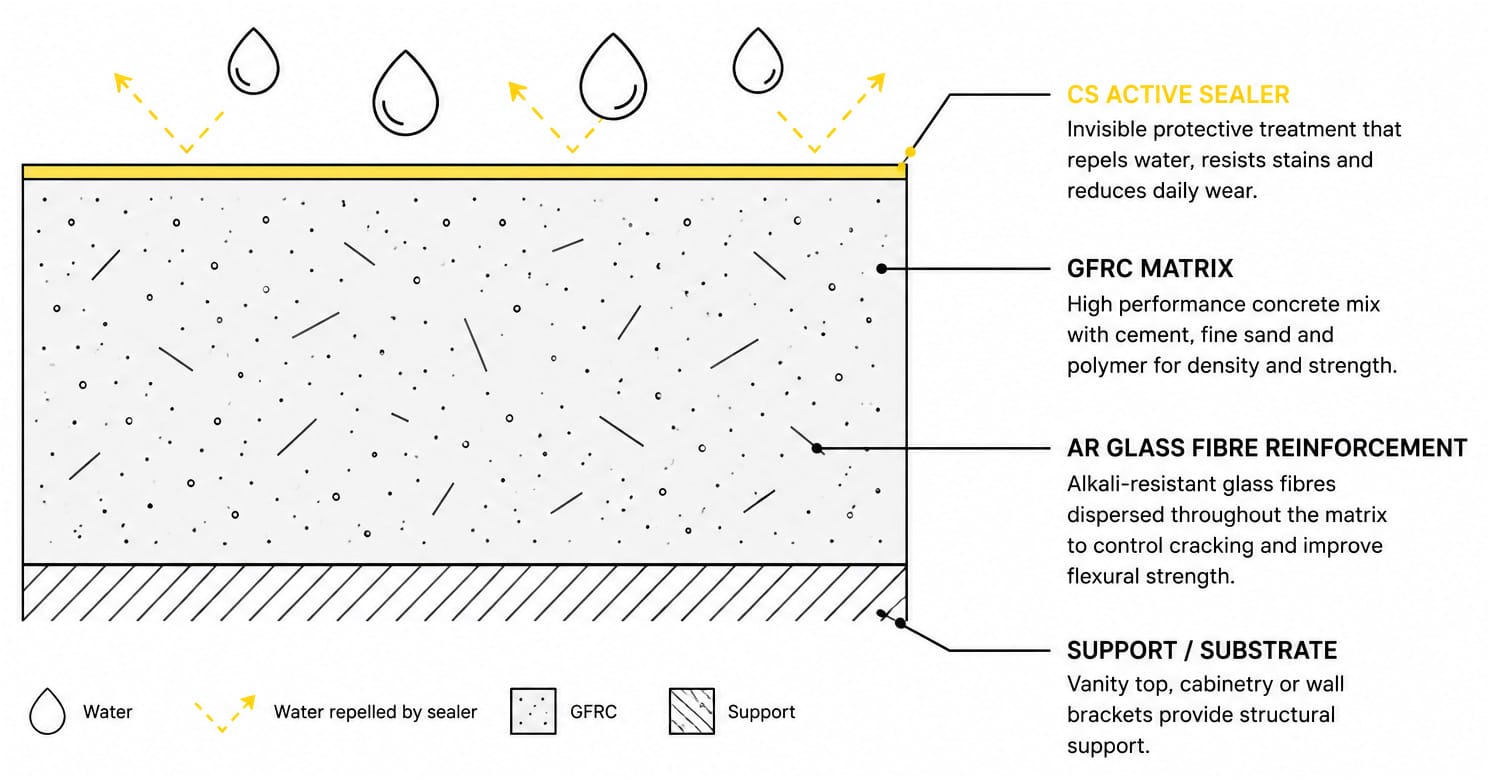
How Concrete Studio's sealer works.
Why is concrete porous?
Concrete is made from cement, water and aggregates. As the concrete cures, tiny microscopic pores remain within the material. These pores are completely normal and are part of concrete's natural character. Without a protective sealer, liquids can gradually soak into these pores, potentially causing staining over time.
How is GFRC protected?
Architectural GFRC products are normally sealed after manufacture.
Modern sealers create a protective barrier that helps resist:
Water
Soap
Toothpaste
Oils
Coffee
Wine
Everyday bathroom products
Different manufacturers use different sealing systems depending on the intended application. At Concrete Studio, our products are sealed using our proprietary CS Active sealing system, developed specifically for interior concrete products such as basins and vanity tops.
Can concrete basins get wet every day?
Absolutely! A properly manufactured and sealed GFRC basin is designed to be used every day. Concrete basins are now installed in homes, hotels, restaurants and commercial buildings around the world. Like any premium surface, they simply benefit from sensible day-to-day care.
Does water damage GFRC?
No. Clean water itself isn't usually the problem. The bigger issue is allowing products like soap residue, cosmetics, oils or strongly coloured liquids to remain on the surface for long periods. Regular cleaning helps maintain both the appearance and performance of the sealer.
Does the sealer wear out?
Over time, every surface coating experiences wear.
How long a sealer lasts depends on:
Frequency of use
Cleaning products used
Level of abrasion
Exposure to chemicals
Some products may eventually require resealing after many years of use, particularly in demanding commercial environments.
How do you care for sealed GFRC?
Routine maintenance is straightforward.
We recommend:
Wiping surfaces dry after use where practical
Cleaning with a mild pH-neutral cleaner
Avoiding abrasive pads
Avoiding harsh acidic or alkaline cleaners
Removing spills promptly
Simple care helps preserve the finish for years.
Is GFRC suitable for bathrooms?
Yes.
Bathrooms are one of the most common applications for GFRC.
Its combination of strength, reduced weight and design flexibility makes it ideal for:
Vessel basins
Vanity tops
Semi-recessed basins
Wall-mounted basins
When properly sealed, GFRC performs exceptionally well in wet environments.
Common Myths
"Concrete absorbs water like a sponge."
Not when it has been correctly manufactured and sealed.
Modern architectural concrete products are specifically designed for daily use in bathrooms and kitchens.
"Concrete should never be used in wet areas."
False.
Concrete has been used in wet environments for decades.
The key is choosing a product that has been properly manufactured and sealed for its intended application.
"If water beads on the surface, it's waterproof."
Not necessarily.
Water beading is one indicator that the sealer is functioning, but the overall performance depends on the complete sealing system and ongoing maintenance.
Why Concrete Studio uses sealed GFRC
Every Concrete Studio basin and vanity is manufactured using Glass Fibre Reinforced Concrete before being sealed for everyday use. Our goal is to preserve the natural beauty of concrete while providing the protection required for modern bathrooms and interiors. The result is a material that retains its authentic appearance while standing up to everyday living.
Frequently Asked Questions
Can I leave water sitting in a concrete basin?
Occasional standing water isn't a problem, but keeping surfaces clean and dry where practical will help maximise the life of the sealer.
Can concrete stain?
Like many natural materials, concrete can stain if spills are left for extended periods. Prompt cleaning greatly reduces this risk.
Is sealed concrete completely waterproof?
Sealers provide excellent protection, but no architectural surface is completely maintenance-free. Regular care helps ensure long-term performance.
Can I use bleach?
Always avoid any harsh chemicals alkaline or acid.
How long does GFRC last?
With quality manufacturing, correct installation and routine care, GFRC products are designed to provide decades of service.