
Is Microcement Waterproof?
Microcement can be used in wet areas such as bathrooms and showers when installed as a complete system and protected with the correct sealer. While microcement itself is cement-based, it is the combination of primer, reinforcing mesh, microcement layers and a high-quality sealer that creates a durable, water-resistant finish.
Is microcement waterproof?
This is one of the most common questions people ask when considering microcement for a bathroom or renovation project. The simple answer is yes, when installed correctly. It's important to understand that the waterproof performance doesn't come from the microcement alone. Like many architectural finishes, it relies on a complete installation system that includes the correct primers, reinforcing layers and protective sealers. When these components work together, microcement creates a seamless surface that performs exceptionally well in areas exposed to regular moisture.
How does microcement resist water?
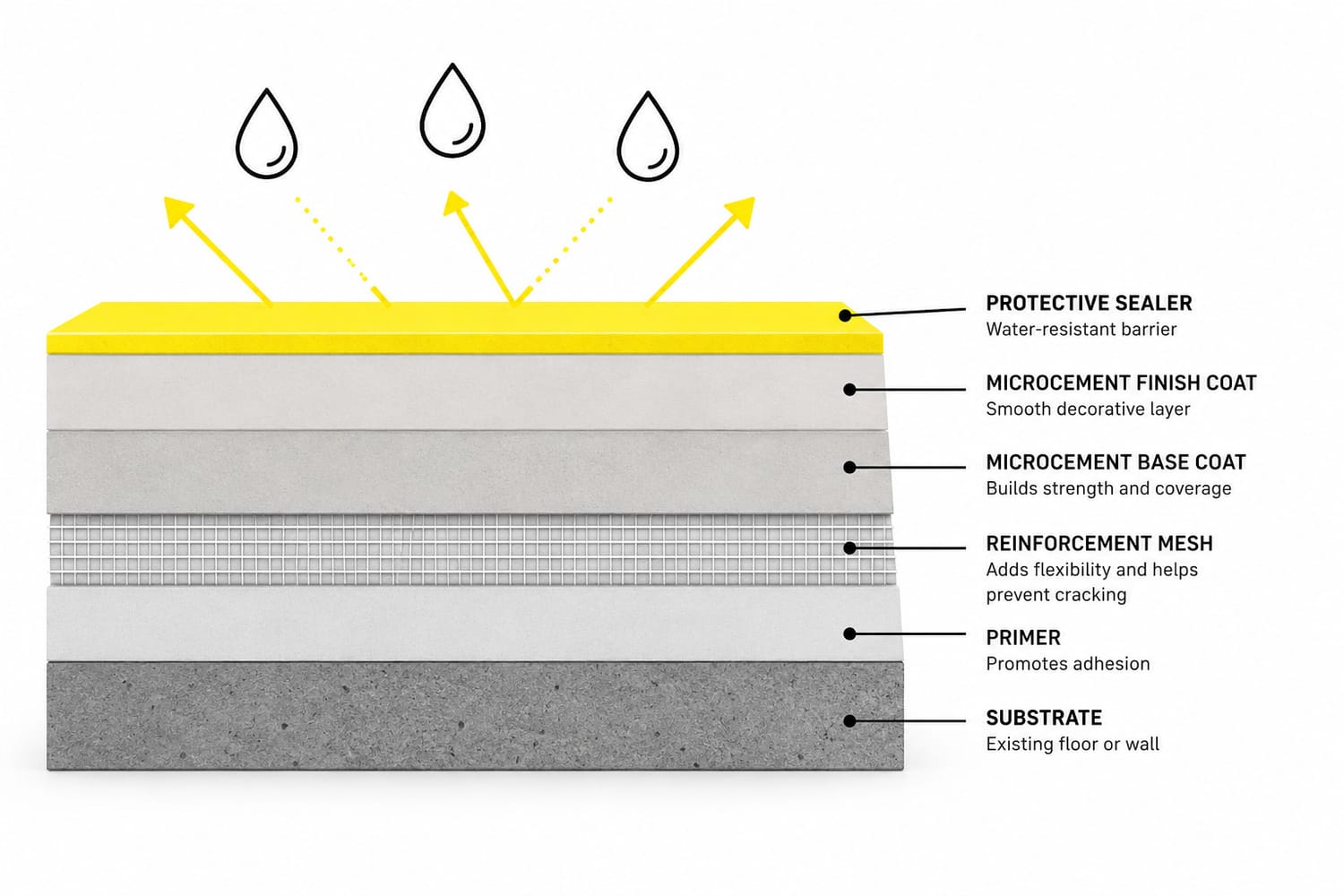
Unlike traditional tiled surfaces, microcement is applied in several thin layers over a prepared substrate before being sealed.
A typical system consists of:
Existing substrate
Primer
Reinforcement mesh (where required)
Base coats of microcement
Finish coats
Protective sealer
The sealer forms the outer protective layer, helping to repel water while also protecting against everyday staining and wear.
Can microcement be used in bathrooms and showers?
Yes. Microcement has become a popular choice for contemporary bathrooms because it creates a clean, continuous finish without the grout lines found in traditional tiles. Common applications include:
Shower walls
Bathroom floors
Vanity splashbacks
Feature walls
Built-in shelving
Benchtops
Its seamless appearance makes spaces feel larger while also reducing the number of joints where dirt and mould can accumulate.
Does microcement need sealing?
Yes. The protective sealer is one of the most important parts of any microcement installation.
A quality sealer helps protect the surface from:
Water penetration
Everyday stains
Soap and cleaning products
General wear and tear
Like timber floors or natural stone, sealers don't last forever. Depending on the product used and the level of use, they may require periodic maintenance to keep the surface performing at its best.
Is microcement the right choice for wet areas?
For walls, floors and showers, microcement is an excellent option when installed by an experienced professional using a complete system. However, if you're looking to manufacture structural products such as bathroom basins, vanity tops or furniture, Glass Fibre Reinforced Concrete (GFRC) is the more suitable material. GFRC is designed to create strong, self-supporting architectural products, whereas microcement is a decorative surface finish. Understanding the difference between these materials is essential when selecting the right solution for your project.
Frequently Asked Questions
Can microcement be used in a shower?
Yes. A properly installed and sealed microcement system is suitable for shower walls and other wet areas.
Is microcement waterproof without a sealer?
No. The protective sealer is an essential part of the system and provides the water-resistant finish.
Can microcement be applied over existing tiles?
In many cases, yes. One of the advantages of microcement is that it can often be applied over stable existing surfaces, helping to reduce demolition during renovations.
Does microcement stain easily?
When correctly sealed, microcement offers excellent resistance to everyday household stains. Prompt cleaning of spills is still recommended to keep the surface looking its best.
How long does a microcement sealer last?
The lifespan depends on the product used, the quality of installation and how heavily the surface is used. Periodic resealing may be recommended as part of routine maintenance.