
What is GFRC?
An introduction to Glass Fibre Reinforced Concrete and why it has become the preferred material for modern architectural concrete.
What is GFRC?
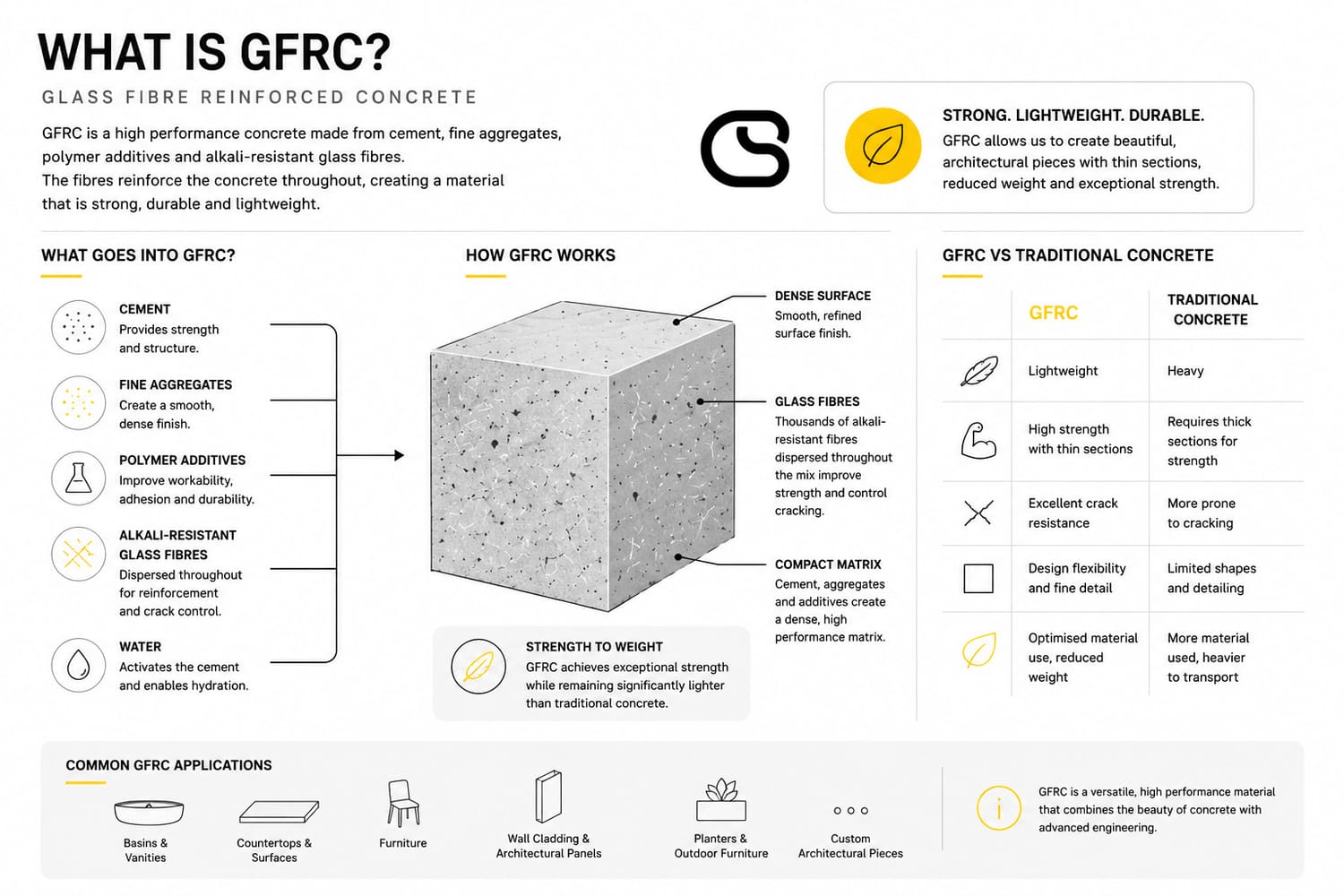
GFRC (Glass Fibre Reinforced Concrete) is a type of high-performance concrete reinforced with thousands of alkali-resistant glass fibres. Unlike traditional concrete, which relies on steel reinforcement and thick sections for strength, GFRC uses glass fibres distributed throughout the mix to create lightweight, durable and highly versatile concrete products.
Developed for architectural applications, GFRC allows manufacturers to produce thinner, lighter and more refined concrete pieces without compromising strength or durability. Today it is widely used for concrete basins, vanity tops, furniture, architectural cladding, commercial fit-outs and bespoke design projects.
At Concrete Studio, GFRC is the material behind every basin, vanity and furniture piece we manufacture.
What does GFRC stand for?
GFRC stands for Glass Fibre Reinforced Concrete.
You may also see it written as: Glass Fibre Reinforced Cement
Fibre Reinforced Concrete (a broader term that can include other fibre types)
When people refer to GFRC in architectural concrete, they are almost always talking about concrete reinforced with alkali-resistant (AR) glass fibres, specifically designed to withstand the highly alkaline environment of cement.
What is GFRC made from?
While every manufacturer develops their own mix design, GFRC is generally made from:
Cement
Fine silica sand
Water
Acrylic polymer
Alkali-resistant glass fibres
Plasticisers and specialist admixtures
Mineral pigments (when coloured concrete is required)
Unlike conventional concrete, GFRC does not contain coarse stone aggregate. This allows it to produce crisp edges, smooth curves and fine surface detail that would be difficult to achieve with traditional concrete.
Want to make your own GFRC projects?
Whether you're just getting started or already working with concrete, our courses are designed to help you build real skills and confidence.
Learn lightweight techniques GFRC from industry professionals
Step-by-step online training at your own pace
Hands-on workshops in Australia and Spain
Suitable for beginners, makers, designers, fabricators and professionals
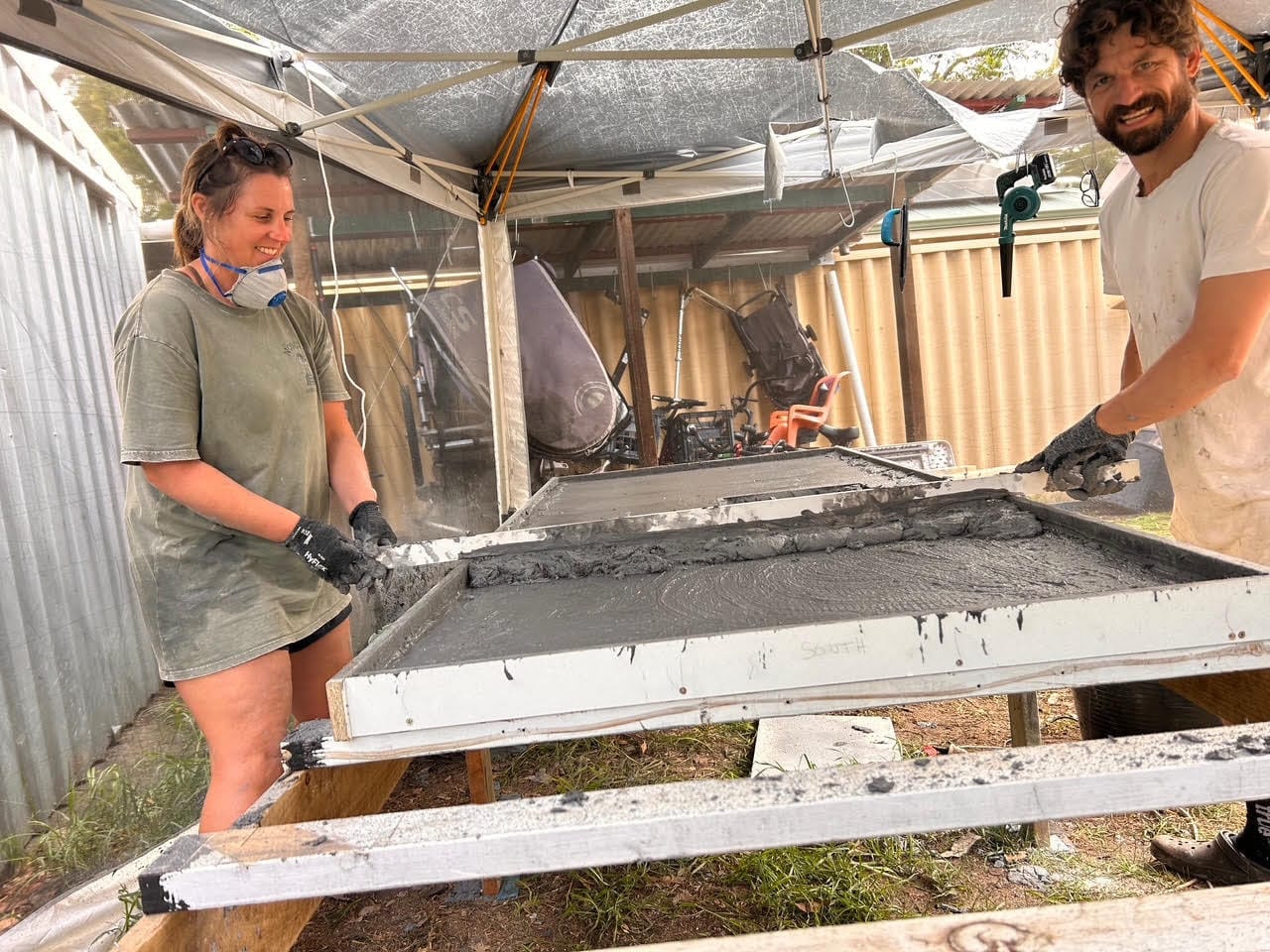
Why is GFRC different from traditional concrete?
Traditional concrete is designed primarily for structural construction. It relies on thickness and mass to achieve strength.
GFRC takes a different approach.
By reinforcing the concrete throughout the mix with glass fibres, it becomes possible to manufacture much thinner sections while maintaining excellent strength and durability.
This means products can be:
Lighter to transport and install
More refined in appearance
Manufactured with complex shapes and finer details
Better suited to architectural and interior applications
For this reason, GFRC has become the material of choice for many designers, architects and specialist concrete manufacturers.
Where is GFRC used?
GFRC is used in a wide variety of architectural and design applications, including:
Bathroom basins
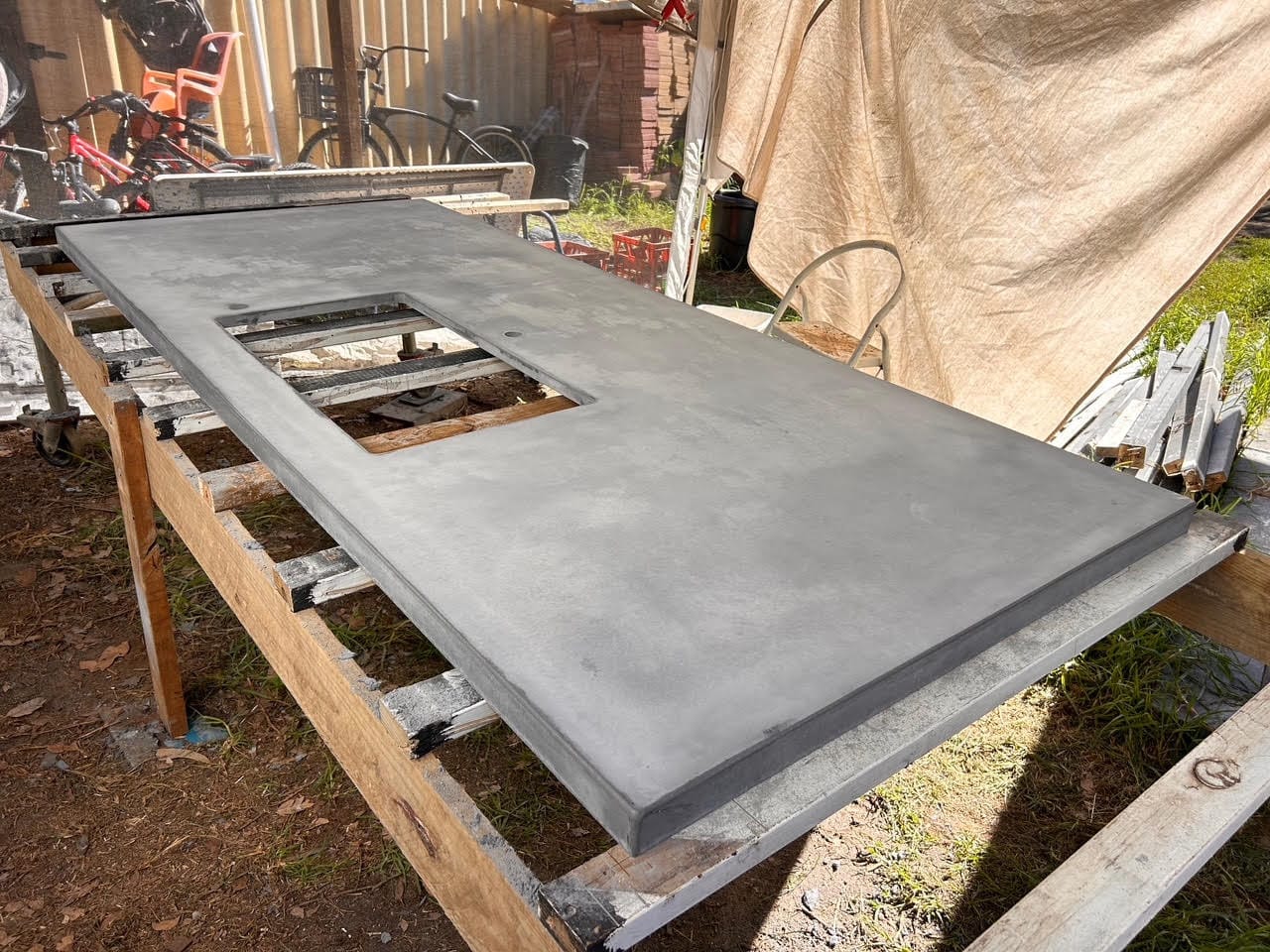
Vanity tops
Kitchen islands
Furniture
Reception desks
Commercial interiors
Exterior cladding
Planters
Fire surrounds
Bespoke architectural features
Its combination of strength, versatility and refined appearance makes it suitable for both residential and commercial projects.
Is GFRC durable?
Yes. When manufactured correctly and properly sealed, GFRC is an extremely durable material.
Like all concrete products, it should be treated as a natural material rather than an indestructible one. However, its excellent strength-to-weight ratio makes it well suited to everyday use in bathrooms, kitchens and commercial environments.
Long-term performance depends on quality manufacturing, correct installation and appropriate care.
Why does Concrete Studio use GFRC?
We've worked with GFRC for many years because it allows us to create products that combine clean architectural design with practical performance. It gives us the flexibility to manufacture elegant, lightweight concrete pieces while maintaining the durability expected from a premium architectural material.
Our manufacturing process has been refined through years of hands-on experience, allowing us to produce concrete products with precise detailing, consistent quality and long-lasting performance. At Concrete Studio we offer an industry-leading ten year warranty on our concrete.
Frequently Asked Questions
Is GFRC real concrete?
Yes. GFRC is genuine concrete. The difference is that it is reinforced with alkali-resistant glass fibres rather than relying on thick sections and traditional reinforcement methods.
Is GFRC lightweight?
Compared with conventional concrete, yes. The ability to manufacture much thinner sections results in products that are significantly lighter while still offering excellent strength.
Can GFRC be used outdoors?
Yes. Properly manufactured and sealed GFRC is suitable for many outdoor architectural applications, including furniture, planters and cladding.
Does GFRC crack?
Like all cement-based materials, concrete can naturally develop fine hairline crazing over time. Properly manufactured GFRC is engineered to minimise structural cracking through careful mix design, reinforcement and curing.
How long does GFRC last?
With quality manufacturing, correct installation and routine care, GFRC products are designed to provide decades of service.